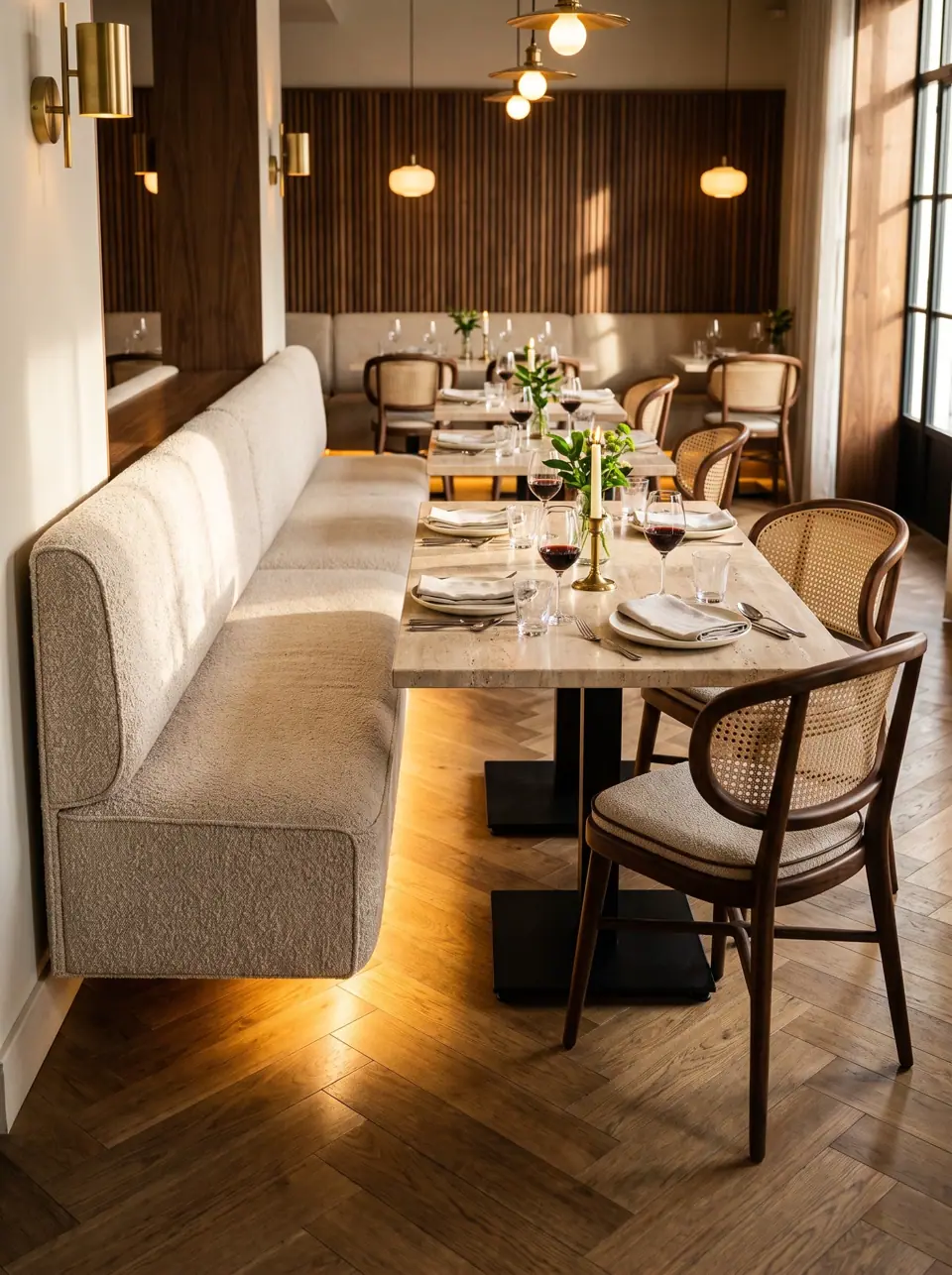
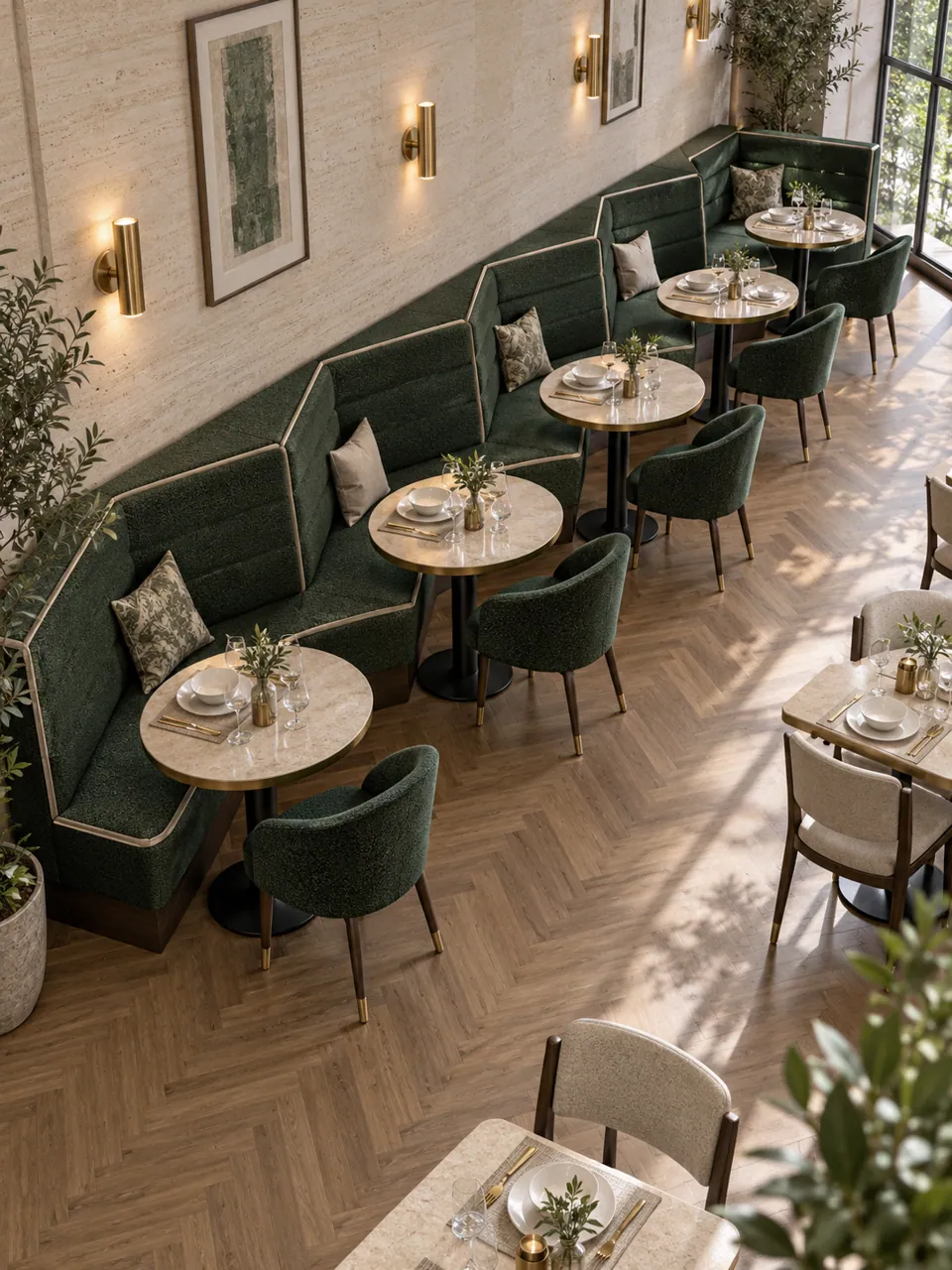
Channel-Back vs Tufted vs Plain Booth Backs: Cost Drivers and Wear
Channel-back, tufted or plain booth backs compared for restaurants: what drives cost, how each cleans, where each wears out, and how to specify the right one.
Planning seating for a venue? Send your floor plan or sizes and we'll quote from shop drawings, factory-direct.
Request a quote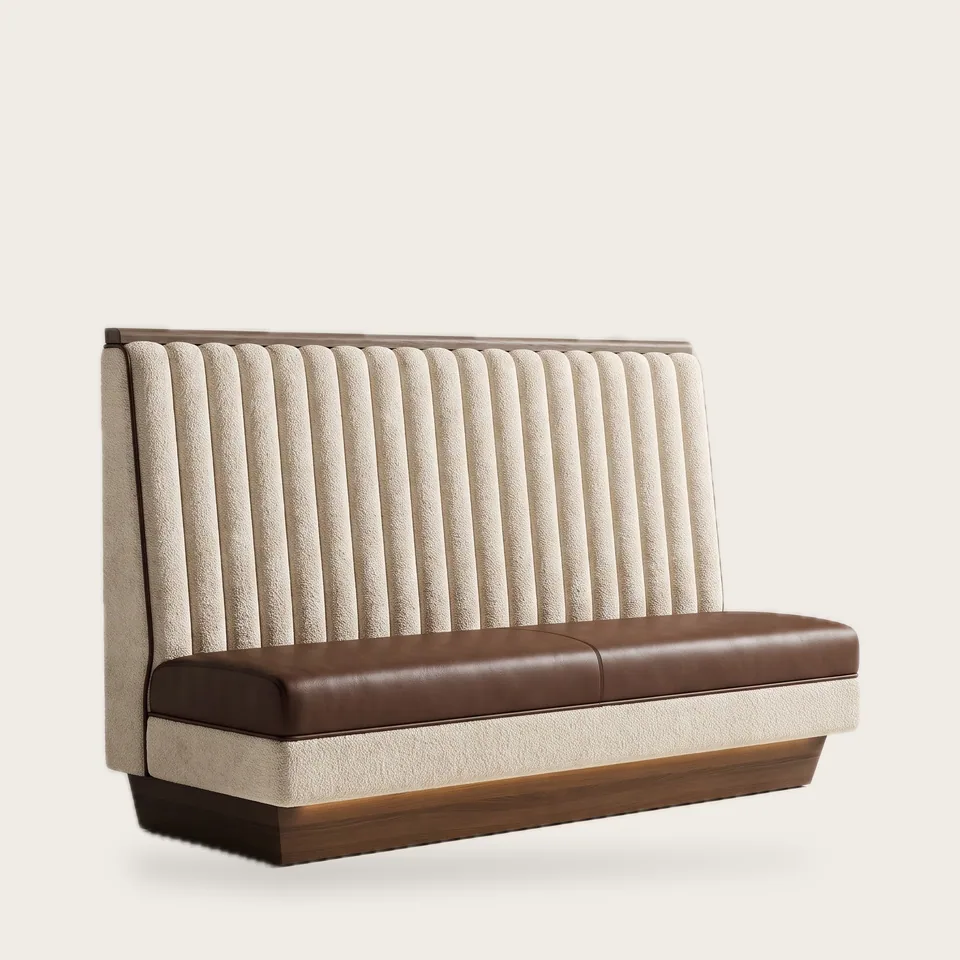
Short answer: A plain (flat panel) back is the simplest to build, clean and re-cover. A channel back adds vertical or horizontal ribs sewn into the cover; it costs more in labor and fabric, but it hides wear and still wipes down well in vinyl. A tufted back, with buttons or stitched diamonds pulled into deep foam, is the most labor-intensive and the hardest to keep clean, and it is the style most likely to show stress at the buttons. Choose by service pace first and by look second.
Buyers usually ask why two quotes for the same length of seating differ, why a tufted booth looks tired after one winter, or whether channel backs pay off in a busy room. This guide from Banquette House (a line by EASEN Commercial Furniture) answers those questions without quoting prices: it explains what each back is, what drives its cost, how it cleans, where it fails, and how to write it into a drawing. Every booth we draw is built to order at our Foshan, China plant and sent straight to you, so each detail below can be set per project.
What is the difference between channel, tufted and plain backs?
All three are upholstered backrests. They differ in how the foam and cover are shaped.
- Plain back. A flat or gently curved panel. The cover is cut and sewn to a simple shape, often with a single welt (piping) around the edge. Foam is a uniform slab.
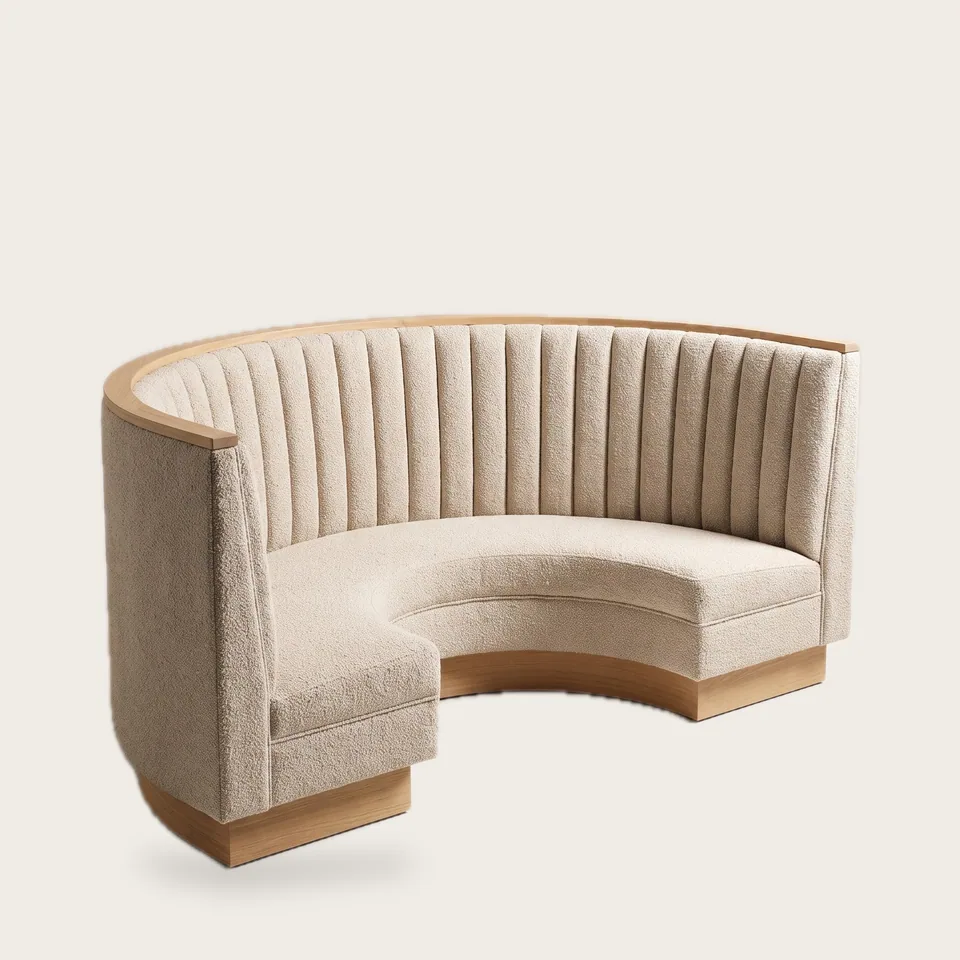
- Channel back. The cover is stitched in parallel lines so that the surface forms ribs, usually 3 to 6 in (8 to 15 cm) apart. Each channel is a short tube of foam held in place by the stitching. Channels run vertically or horizontally, and some designs mix both.
- Tufted back. The surface is pulled inward at set points, held by buttons, stitched dimples or pleated "biscuit" shapes. The cover is cut oversize so it can fold into the pulls, and the foam is typically thicker so the pulls have depth to sink into.
Catalog styles often sit between these, so when you compare quotes, count seams and pulls, not names.
| Feature | Plain back | Channel back | Tufted back |
|---|---|---|---|
| Surface | Smooth panel | Parallel ribs | Pulled dimples, buttons or diamonds |
| Seams per back | Edge seams only | Edge seams plus one per channel | Edge seams plus pleats or button points |
| Sewing labor | Lowest | Medium | Highest |
| Cover yardage | Lowest | Medium to high | Highest, as extra material is folded in |
| Foam | Standard slab | Standard slab or channel inserts | Deeper foam, often shaped |
| Wipe-down | Easiest | Easy along the channels; grooves need a crumb check | Slowest; dimples hold crumbs |
| Look | Modern, quiet | Classic American restaurant | Formal, steakhouse, hotel bar |
What drives the cost of each back style?
The price of a booth is set by the length of seating, the frame, the cover and the labor. The back style moves two of those four: cover material and sewing time. There is no standard figure we can give, and any rule that says channel costs a fixed percentage more than plain should be treated with suspicion. These are the real drivers, in roughly the order they matter.
| Driver | Plain | Channel | Tufted | Why it matters |
|---|---|---|---|---|
| Sewing time | Low | Medium | High | Every seam and every pull is operator time |
| Cover yardage | Low | Medium | High | Folds consume material |
| Pattern matching | Low | Medium | High | Stripes and prints must align across channels and pulls |
| Foam cutting | Low | Low to medium | High | Tufting needs thicker, sometimes shaped foam |
| Button or stud hardware | None | None | Yes | Buttons are covered and fixed individually |
| Frame detail | Simple | Simple | Can need a firmer backing for the pulls | Pulls anchor to a board or webbing |
| Repair labor in service | Low | Medium | High | Finding and replacing a failed button or seam is slow |
Two further points shape a quote:
- Back height. A tall channel back has more ribs and more cover than a low one, so height multiplies the cost difference.
- Cover material. A plain vinyl channel back and a patterned fabric channel back are very different jobs. Fabrics with repeats cost more to cut. For cover and foam choices, see our guide to booth upholstery and fire code.
For how to read a quote built from these items, see our guide to what drives booth cost per linear foot.
Which back is easiest to clean?
The cover material matters more than the pattern, but the surface shape decides how fast a server can wipe it.
- Plain. One stroke of a cloth reaches every point. In smooth contract vinyl this is the fastest turn-over clean there is.
- Channel. A cloth follows the grooves. Vertical channels shed spills downward toward the seat; horizontal channels can hold liquid and crumbs in each groove. If your back-to-seat gap is open, crumbs also fall through, which is why many booths include a crumb strip or a small gap at the seat-back joint.
- Tufted. Each dimple or button collar is a small trap for crumbs, sauce and dust. Staff must work around them with a brush or damp cloth, and neglected tufts darken over time in light colors.
A practical test: time one wipe-down of a back, then multiply by the number of backs and the turns per night. That total is the ongoing cost of the style.
If wipe-clean speed is your top requirement, look at a plain-panel vinyl booth, or a vinyl channel back with wide, shallow ribs.
Where does each back style wear out?
Wear shows up at predictable points.
| Back | First failure point | Typical cause | How to reduce it |
|---|---|---|---|
| Plain | Edge welt and the top rail | Rubbing from coats, bags and shoulders | Specify a reinforced welt and a firm top edge |
| Channel | Stitch lines at the channel bottoms | Guests leaning, pulling at the seam | Heavy bonded thread, backing fabric behind the vinyl, closer stitch spacing |
| Tufted | Button anchors and pleat folds | Repeated pressure on the same pull points | Strong anchor twine, a backing board, buttons fixed through to the frame, spare buttons supplied |
Two wear points apply to all three. The seat front edge takes the most abuse in any booth, so reinforce it. And hair products stain the upper back, where a mid-tone plain or shallow channel back is easier to clean than a pale tufted one.
A high-traffic, high-turnover room such as a diner or family restaurant favors plain or channel. A slower, higher-check room can carry tufting if the staff are told how to clean it. For the lighter end of tufting, our Bowery Biscuit Tufted Banquette shows a shallow biscuit pattern,.
Which back style suits which restaurant?
| Restaurant type | Recommended back | Reason |
|---|---|---|
| Diner, burger, breakfast, family | Channel in vinyl, or plain | Fast clean, hides scuffs |
| Cocktail bar, lounge | Tufted or deep channel | Atmosphere matters more than turnover speed |
| Steakhouse, hotel dining | Tufted in dark leather-look | Formal look; dark colors forgive the crevices |
Upholstery material interacts with this choice. Our standard cover is flame-retardant faux leather; if you want genuine leather, ask and we will quote it separately. Fabric shows more soiling in channels and tufts than smooth vinyl does.
For wall runs, see the wall banquettes collection, where the Halsted Channel-Back Banquette shows a ribbed profile.
How do you specify a back style on a drawing?
Write these items into the shop drawing so that the quote and the finished booth agree.
Channel spacing is the number that most often gets lost between quote and drawing. Here is how spacing turns into channel count on two common back widths:
| Channel spacing | Channels across a 48 in (122 cm) back | Channels across a 72 in (183 cm) back | Effect on the back |
|---|---|---|---|
| 3 in (7.5 cm) | 16 | 24 | Tight, vintage-diner rhythm; the most seams to sew and wipe |
| 4 in (10 cm) | 12 | 18 | Classic restaurant look; a common middle ground |
| 6 in (15 cm) | 8 | 12 | Bold, lounge-like ribs; fewer seams, fuller channels |
- Style and count. State the number of channels or tufts per back, or the spacing between them, instead of just "channel" or "tufted."
- Direction. Vertical, horizontal or mixed channels; diamond or square tuft grid.
- Back height and thickness. Give the finished height from the seat and the total thickness at the thickest and thinnest point.
- Foam spec. Density and thickness, and whether channels are filled with separate inserts. Foam is also where fire performance is specified. We can source foam and cover to the fire rule you name with the material suppliers' reports; our own BS 7176 medium hazard report (STC) covers our flame-retardant faux leather and foam, and finished-item testing is quoted separately. Ask your local fire officer which rule applies.
- Cover, thread and backing. Contract material, heavy-duty thread for load-bearing seams, and any backing fabric or board behind channels and tufts.
- Crumb detail and spares. A gap or strip at the seat-back joint, plus spare buttons or a spare cover.
A pre-production sample of the back lets you feel the pull and test the clean-down. Measured from signed drawings and sample, a standard back style typically takes 30–45 days to produce and a custom one 45–60, with sea transit on top; the quote gives your dates.
Checklist: decide on a back style
- Rate your room's turnover: high, medium or low.
- Decide who cleans and with what cloth or chemical.
- Pick the cover first (vinyl, fabric, leather-look), then the back style.
- Count seams or pulls per back on each option you compare.
- Ask for the stitch or anchor detail at the load points.
- Ask for spare covers or buttons with the first shipment.
Common mistakes
- Choosing tufting for a high-turnover room. The look photographs well, but staff time on cleaning becomes a recurring cost.
- Comparing quotes by style name only. One supplier's "channel" may have half the ribs of another's.
- Ignoring the stitch detail. Channel backs fail at the seams; thin thread and no backing fabric produce splits.
- Pale fabric tufts in a family restaurant. Soil collects at every pull.
- No spare buttons or cover. A single failed button on a tufted booth can leave it out of service until a part arrives.
Send us your booth plan
Send us a floor plan or sketch, your preferred cover, and a photo of any style you like. We will return a drawing, show alternatives for the back style, and quote the options line by line so the difference between channel, tufted and plain is visible. Reach us on the contact page.
FAQ
Are channel-back booths more expensive than plain booths?
Usually, yes, because channels add seams, sewing time and cover yardage. The size of the difference depends on back height, the number of channels, the cover and the run length, so ask for the options quoted separately on the same drawing rather than relying on a general percentage.
Are tufted booths hard to clean?
They are slower to clean than plain or channel backs, because each button, dimple or fold traps crumbs. In dark vinyl with a soft brush as part of closing duties, they stay presentable. In pale fabric and a high-turnover room, expect visible soiling in the pulls.
Which booth back lasts longest?
A plain back has the fewest stress points, so it usually lasts longest between repairs. A well-made channel back with a heavy thread and backing fabric comes close. Tufted backs depend on the anchor detail at each pull, which is the first thing to inspect.
Can I mix channel and tufted backs in one restaurant?
Yes, if there is a reason: for example, tufted booths in a lounge area and channel or plain booths in the main dining room. Within a single wall run, keep one style so the seam rhythm reads as intentional.
What foam thickness does a tufted back need?
Tufting needs more depth than a plain back so the pulls have room to sink without compressing the foam to nothing. The exact thickness depends on pull depth and back height, so we set it on the drawing and confirm it with a sample if you wish.
Does the back style affect fire performance?
Fire performance depends on the cover, any interliner and the foam, not on the pattern. More material in a deep tuft is more material to test as a composite. We can source foam and cover to the rule you name with the material suppliers' reports, and arrange finished-item testing at a third-party lab, quoted separately; confirm the rule with your local fire officer.
Can a channel or tufted back be repaired in place?
Often, yes, if the cover is held by clips or studs rather than glue and staples. Single buttons and short seams can be replaced on site. Ask for that detail on the drawing and order spare parts with the first shipment.
Send us your floor plan or wall dimensions and the number of covers you need. We will reply with a layout suggestion and a quote by the linear foot.
Request a quote